


RegTech Insight Regulatory Reporting & Data The latest content from across the platform

Delta Capita Report Hub Extends Controls into Post-Reporting Assurance
Regulatory reporting teams have spent much of the past two years focused on rewrites, implementation deadlines and submission mechanics. The priority is now shifting to Post-Reporting Assurance: once a report has been filed, can the firm evidence that the data was accurate, complete, reconciled and subject to proper oversight? That shift is shaping the next…
Qomply Brings Regulatory Intelligence Into AI Compliance Workflows
Qomply has launched QomplyAI, a new capability designed to make its regulatory intelligence available through AI assistants including ChatGPT, Claude and other Model Context Protocol-compatible clients. QomplyAI is intended to let reporting, compliance and oversight teams ask regulatory questions in natural language and receive structured answers that can support workflow decisions. Example use cases include…

ESMA Pushes ‘Report Once’ Model for EU Reporting
The European Securities and Markets Authority (ESMA) has advanced two major strands of its reporting simplification agenda, setting out a proposed integrated reporting framework for investment funds while opening the next phase of work on streamlining transaction reporting across Markets in Financial Instruments Regulation (MiFIR), European Market Infrastructure Regulation (EMIR) and Securities Financing Transactions Regulation…

CFTC’s Selig Sets Out Agenda for Leaner Rules and Faster Markets
Michael Selig has placed derivatives regulation at the centre of the US competitiveness agenda, using his keynote at the ISDA annual meeting to call for a more proportionate rulebook, deeper SEC and CFTC alignment, and a clearer path for innovation in swaps, clearing, tokenised collateral and market structure. He framed the CFTC’s task as keeping…

Bloomberg’s Kate Lee on Regulatory Data as an Operating Layer for Compliance and Reporting
Regulatory data has become a firmly established part of the control architecture of capital markets firms. As transparency rules diverge across the jurisdictions, liquidity monitoring becomes more granular, and supervisors demand stronger evidence of how figures are derived, firms are obligated to treat regulatory datasets as governed, versioned and explainable operating assets. In this Q&A…

SEC and CFTC Recalibrate Private Fund Reporting for Systemic Risk Oversight
The SEC and CFTC have proposed a substantial reset of Form PF, raising reporting thresholds and streamlining requirements for private fund advisers while preserving supervisory access to data on the largest and most systemically relevant managers. The proposed rule would lift the general filing threshold from $150 million to $1 billion in private fund assets…

Waystone Positions ManCo Platform as Infrastructure for Global Fund Expansion
For asset managers expanding into new markets, launching funds across jurisdictions means navigating different supervisory expectations, different disclosure regimes, different distribution rules and different interpretations of similar underlying obligations. The operational burden is growing at the same time as managers remain under pressure to control costs, protect margins and bring products to market faster. That…

ISDA Taps Gentek AI for DRR Traceability Tool
The International Securities Swaps and Derivatives Association has selected Gentek AI to build a traceability tool for Digital Regulatory Reporting (DRR). Gentek will develop a tool designed to let users track the history of DRR decision-making and connect coding choices back to regulatory requirements. The story behind the announcement is that Gentek comes to the…
FIX Trading Community Urges Regulatory Alignment in Response to FCA Consultations
The FIX Trading Community has called for significant changes to UK financial regulation in its formal response to FCA consultations on the UK consolidated tape and transaction reporting. Executive Director Jim Kaye emphasised that harmonising UK reporting rules more closely with EU standards would reduce complexity, lower the reporting burden, and improve the quality of…
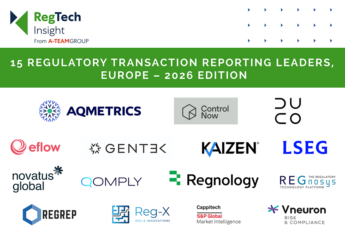
15 Regulatory Transaction Reporting Leaders, Europe – (2026 Edition)
Transaction reporting in Europe is no longer a question of meeting submission deadlines – it is a question of evidencing control. Core regimes such as MiFIR and EMIR have been in force for several years, but supervisory focus has shifted decisively from completeness toward data quality, reconciliation, and traceability. The EMIR Refit go-live in April…