The concept of intelligent trading is gaining momentum as trading firms acknowledge that competitive advantage is no longer only about speed, but also about a flexible and scalable architecture that can handle Big Data and analytics on the fly using technologies such as in-memory data and complex event processing.
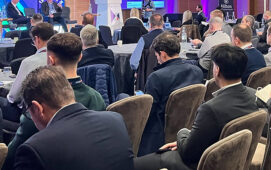
The technology elements and people skills needed to create an intelligent trading architecture were outlined in an expert panel discussion at last week’s A-Team Group Intelligent Trading Summit. Leading the discussion, A-Team Group editor-in-chief Andrew Delaney set the ball rolling with a question about what intelligent trading meant to the panellists.
Richard Bell, responsible for fixed income etrading latency, performance and Big Data at BNP Paribas, responded: “Intelligent trading is a combination of low latency, which is necessary but not sufficient, and good analytics. It is also about preserving traders’ intelligence and using the wealth of experience in a firm.”
Taking a different view of the human element of intelligent trading, Stuart Grant, EMEA business development manager for financial services at SAP, said: “The need is to unify data models and improve the links between pre- and post-trade operations, but the problem in doing this is often a human resources issue. Technology has evolved dramatically over the past five years and offers new capabilities, but many firms are struggling to maintain systems rather than innovate.”
Mike Powell, managing director, enterprise at Thomson Reuters, added: “Intelligent trading means different things to different people. On the agency or sell side, intelligent trading could mean improved access to liquidity in lit and unlit pools, and more efficient execution. On the internal investment and proprietary trading side, it could be about fast analysis of Big Data to support investment decisions, and it could include news, social media and political risk data.”
With some ideas of what intelligent trading means to different types of traders on the table, Delaney asked how intelligence can be added to trading strategies. Powell answered: “I see firms deploying architectures that are flexible and scalable and include an extraction layer so that services can be quickly plugged in and out. There needs to be integration between trading engines and mid- and back-office functionality, and there needs to be agility so that traders can move out of challenging markets and into markets offering opportunities.”
Alessandro Petroni, senior principal architect in financial services at Tibco Software, added: “Intelligent trading is about speed, information and intelligence. We know how to manage speed and there is plenty of data, so we must then add intelligence. This comes from a flexible architecture that can support change and evolution rapidly, a robust toolkit, a reliable production environment and quality controls.”
Returning to the human aspect of trading, Grant suggested the addition of a data scientist to support intelligent trading, saying: “The ability to transfer knowledge from the business to trading has diminished, so we never really know what the right data is. Big Data can be captured and investigated, but every trading desk should have a data scientist to provide traders with the right data to make decisions. The need is to unify people, business knowledge and technology.”
Regulation is also in the frame, with panellists agreeing that regulatory compliance is at the heart of many change programmes and also has business implications. Grant commented: “The ability to capture real-time data, analyse it and deliver it to traders is emerging on the back of the regulatory drive.”
The adoption of intelligent trading reflects not only the need to remain competitive, but also the availability of emerging technologies and tools that have reached production quality. Bell cited Big Data and the ability to store 4 Tbytes of data on the Amazon cloud for a couple of hundred dollars, while Powell pointed to cloud environments that enable firms without the necessary internal resources to test analytics and algos in the cloud before implementing them in trading strategies. Petroni added predictive analytics, data visualisation and the ability to combine historical and real-time data, concluding: “Staging data is way too late. Intelligent trading is about doing everything on the fly and has to include large datasets, in-memory data and complex event processing.”
Subscribe to our newsletter