The architecture of the trading desk is evolving as financial institutions seek to simplify fragmented technology environments, extend their multi-asset capabilities and incorporate AI into trading workflows. While the convergence of order management systems (OMS) and execution management systems (EMS) has been a longstanding industry objective, the emphasis is increasingly shifting towards interoperability, shared data and the ability to deliver a consistent trading experience across multiple platforms.
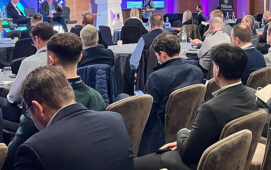
These themes were explored during a panel discussion entitled Re-imagining the trading experience and the future of the O/EMS at A-Team Group’s recent Buy AND Build event in London. The discussion, conducted under the Chatham House Rule, examined how firms are approaching platform integration, where AI is delivering practical benefits and how emerging technologies are influencing decisions about proprietary development and vendor solutions.
Integration Without Consolidation
For many trading organisations, the legacy of acquisitions, business expansion and asset-class specialisation has resulted in multiple OMS and EMS platforms operating alongside one another. Consolidating these environments can reduce complexity, but replacing disparate systems with a single technology stack isn’t necessarily the preferred approach.The panel highlighted the different responsibilities of order management and execution, particularly on the buy side. OMS platforms typically support investment intent, portfolio-specific workflows and business logic, while EMS platforms concentrate on trading desk functionality, execution and market connectivity. Maintaining these distinctions can preserve specialist capabilities while allowing firms to present users with a more integrated environment.
One approach involves retaining separate OMS and EMS components, connected through standardised interfaces such as FIX, while establishing a common data layer across both. This allows firms to share information for analytics, monitoring and risk management without tightly coupling every element of the architecture.
On the sell side, where order management and execution are often more closely integrated, the architectural boundaries may instead sit between client-facing order management, algorithmic execution and market access. Standardising data formats across these components can make it easier to introduce or replace individual systems while limiting disruption to the wider trading environment.
Multi-asset execution adds another dimension. Firms seeking to offer consistent services across equities, derivatives, credit and FX need visibility across trading activities that may depend on fundamentally different underlying technologies. A unified interface can provide an initial layer of integration, with more sophisticated orchestration capabilities potentially allowing trading instructions to flow across asset classes.
The business case extends beyond operational cost savings. Better integration can also support new trading strategies, broader asset-class coverage and improved risk visibility, particularly where existing manual processes constrain expansion.
AI Enters the Trading Workflow
Although autonomous trading agents are attracting considerable attention, the panel suggested that AI’s more immediate value lies in improving existing workflows and helping traders make better use of available information.
One application involves converting unstructured communications into actionable trading intelligence. In markets such as credit, where valuable information is frequently exchanged through voice, chat and broker messages, AI can extract relevant details and combine them with portfolio positions and other structured data.
Other applications include monitoring incoming orders, identifying potentially interested clients and preparing tailored communications for traders to review. These capabilities can reduce administrative work while keeping execution decisions within established human-controlled processes.
AI-assisted software development is also producing measurable productivity improvements. Tasks that previously required substantial development resources can increasingly be completed in shorter cycles, allowing technology teams to deliver internal tools and workflow enhancements more quickly.
Quantifying the commercial return remains challenging, however. Time saved on individual tasks doesn’t automatically translate into higher revenues or faster deployment. A firm may accelerate its own development work only to encounter unchanged delivery schedules from external vendors or integration partners.
The longer-term prospect of intent-driven trading, where a user specifies an objective and intelligent systems coordinate execution, introduces further challenges around algorithm certification, regulatory compliance and governance. For now, deterministic workflows and clearly defined controls remain central to production trading environments.
The effectiveness of these applications also depends on the underlying data architecture. Clean, accessible and permission-controlled information is essential, particularly where AI-generated insights draw on multiple trading systems. Shared data infrastructure can provide the visibility needed for both intelligent automation and conventional risk management.
The Changing Buy/Build Equation
The growing accessibility of AI development tools is beginning to influence how firms evaluate proprietary technology against commercial O/EMS platforms.
The panel described a familiar distinction between capabilities that provide competitive differentiation and those that can be sourced more efficiently from specialist vendors. Business-specific order management logic and investment workflows may justify internal development, while market connectivity and standardised execution infrastructure are often better suited to commercial solutions.
AI-assisted coding potentially expands the range of functionality firms can develop themselves, reducing the resources needed for certain projects. It also raises expectations of vendors, particularly where customers can now prototype capabilities internally much faster than their suppliers can deliver equivalent enhancements.
Nevertheless, the initial development effort represents only part of the total cost of ownership. Maintaining proprietary platforms requires ongoing investment in support, testing, regulatory changes and specialist expertise. Integration costs can also substantially affect the economics of vendor adoption, making open APIs, standard interfaces and straightforward migration increasingly valuable.
These considerations reinforce the importance of understanding existing technology dependencies before embarking on major transformation programmes. Mapping fragmented systems, data flows and operational risks provides the foundation for decisions about consolidation, AI deployment and platform replacement.
As trading technology becomes more modular and intelligent, firms have greater flexibility in how they assemble their trading environments. The challenge is to use that flexibility to improve execution capabilities and operational control without introducing unnecessary complexity.
Subscribe to our newsletter