Trading infrastructure modernisation is no longer being driven solely by latency reduction or cost efficiency. The stronger message emerging across the industry is that firms are having to prepare for markets that are increasingly global, extended-hour, automated and operationally unforgiving.
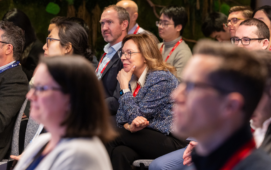
That was the central takeaway from a panel discussion at A-Team Group’s recent TradingTech Summit London 2026 on “The strategic pivot – Modernising infrastructure for continuous, global markets”, featuring Anvar Karimson, Group CTO, Kepler Cheuvreux; Oskar Wantola, Head of Execution Technology, Man Group; Robert Cranston, Head Equity Business Development Sales Strategy, SIX Group; and Will Winzor Saile, Partner, Execution Analytics & Architecture, Rothschild & Co Redburn. The panel was moderated by Irina Sonich-Bright, Managing Director, Head of Market Access Product, Agency Trading, UBS.
The panel was careful not to overstate the immediacy of 24-hour institutional trading. But it did point to a broader and more important shift. Infrastructure modernisation is becoming less about periodic transformation programmes and more about building platforms, workflows and support models that can adapt continuously as market structures evolve. As one speaker put it in closing, change is continuous, so systems have to be as well.Continuous readiness, not just 24/7 trading
One of the most useful aspects of the discussion was its broader definition of “continuous market readiness”. This was not simply shorthand for round-the-clock equities trading. It also covered extended trading sessions, rising cross-border activity, follow-the-sun workflows, and the reality that shocks in one region increasingly spill quickly into others. The panel’s opening framing was that markets are now more connected, more active across geographies and more unforgiving of outdated infrastructure than they were even a few years ago.
That in turn changes what readiness means. Resilience, automation and architectural flexibility are no longer strategic nice-to-haves. They are becoming core operational requirements. Yet the panel also made clear that demand remains uneven. Extended-hours activity is advancing in some areas, but there is still a gap between that momentum and the willingness of institutional firms to support full 24-hour execution. The more measured conclusion was that firms do not need to assume a single end-state tomorrow, but they do need a credible plan for how they would respond if market demand keeps moving in that direction.
Building infrastructure that can change safely
A central theme throughout the session was that modernisation is not a one-off project. It is an ongoing discipline. That has important consequences for architecture. Across buy side, sell side and exchange perspectives, the discussion repeatedly returned to modularity, interoperability, redundancy and the ability to replace or upgrade components without destabilising the wider stack.
What mattered was not agreement on a single sourcing model. Some panellists argued for deeper in-house ownership of core technology in order to understand systems end to end and reason about their behaviour. Others described more mixed “buy and build” strategies, using vendors or brokers for commoditised capabilities while focusing internal resources on the higher-value layers above them. The common thread was the need for foundations that are sound, intelligible and adaptable over time.
That emphasis on componentisation also reflected a practical constraint voiced by the audience itself. Legacy systems and resource pressure emerged as the main barriers to continuous market readiness. In that context, the case for modular architectures is not just theoretical elegance. It is about making change more manageable in firms where budgets, people and time are all limited.
From manual oversight to exception-based operations
The panel also moved the conversation beyond architecture into workflow design. One of the clearest points was that continuous markets should not be interpreted as requiring continuous manual supervision. Instead, the direction of travel is towards operating models in which automated flow is monitored by exception, with humans stepping in when alerts indicate that something has gone wrong.
This is a significant shift. It suggests that firms are trying to absorb higher order volumes, longer trading coverage and more fragmented global activity without scaling desk headcount in parallel. That in turn increases the importance of consistent workflows, documented playbooks and follow-the-sun support structures. If a problem emerges overnight, the response cannot depend entirely on local expertise or institutional memory held by a small number of specialists. Systems and processes need to be understandable enough for teams in different regions to act quickly and consistently.
The same logic also shaped the panel’s discussion of AI. It was treated not as a headline solution to market structure change, but as an enabler of software development, testing, troubleshooting and support. In that framing, AI becomes most useful when it helps teams retrieve prior fixes, interpret internal documentation and respond faster to infrequent but consequential issues.
Data discipline matters more than regulation
Another strong insight from the discussion was that regulation itself was not presented as the main obstacle to more continuous trading. The broader view was that firms should already be capturing the relevant data in real time, processing it reliably and separating that data capture from the live execution path. The real issue is whether the platform has clean enough data, disciplined enough processes and robust enough escalation paths to support more continuous operating models.
That is an important distinction. Real-time systems still need to be fast and unobstructed, but they also need passive, out-of-band data capture that supports monitoring, reporting and analysis without interfering with execution performance. The panel suggested that this separation between execution flow and data oversight is becoming a core design principle for modern trading infrastructure.
Modernisation as a permanent capability
The business case for modernisation is also shifting. Rather than being justified purely through cost takeout, infrastructure investment is increasingly being linked to resilience, client experience, speed to market and risk reduction. Several contributions pointed to the need for a standing allocation to maintenance and renewal, alongside project-based investment tied either to product opportunities or to the avoidance of operational failures and remediation costs.
The broader conclusion from the panel was therefore not that institutional markets are on the verge of fully continuous trading. It was that firms, brokers and market operators are already being forced to modernise as though the traditional boundaries of the trading day can no longer be taken for granted. The strategic pivot is not simply towards faster systems. It is towards infrastructures and operating models built for continuous adaptation.
Subscribe to our newsletter