
About a-team Marketing Services
The knowledge platform for the financial technology industry

A-Team Insight Blogs

TNS Adds Infrastructure Monitoring Capability to Financial Extranet

Subscribe to our newsletter

US network operator Transaction Network Services (TNS) has added a performance and utilisation monitoring capability to its secure financial markets extranet. TNS Oculus allows the company’s financial markets clients to assess the performance of the TNS services they are using, see the status of connected devices and assign entitlements through a point of access.

The move brings the provider into line with providers like Pico, Fixnetix and CJC, all of which offer varying levels of infrastructure monitoring as part of their broader connectivity and trading infrastructure offerings.

TNS Oculus is accessed through an online portal that provides the same level of performance data granularity that’s used by TNS Network Operating Centres globally. Through the portal, users are able to access a complete inventory of all the TNS services being used by their organisation as well as performance statistics.

According to Jeff Mezger, director of product management for TNS’ Financial Services business, “Customers utilizing TNS’ secure connectivity services need insight into performance and the ability to see the status of their connected devices as data flows through them.”

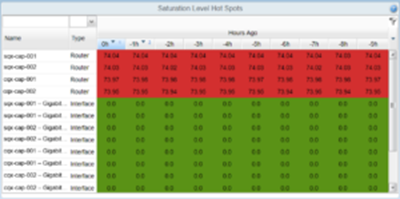
TNS Oculus draws upon TNS’s 24x7x365 monitoring support to support alert capabilities that can be used to notify clients of errors and/or service outages. Issues and potential issues are highlighted through a simple ‘Hot-Spot’ dashboard.
The new capabilities have been designed to “help our customers respond quickly to incidents and outages and project their future capacity needs,” says Mezger. Its introduction follows the recent addition of TNS’s TNSXpress Layer 1 low-latency connectivity solution to the London Stock Exchange’s City of London data centre.

Subscribe to our newsletter

Related content

WEBINAR

Recorded Webinar: Navigating the Build vs Buy Dilemma: Cloud Strategies for Accelerating Quantitative Research

For many quantitative trading firms and asset managers, building a self-provisioned historical market data environment remains one of the most time-consuming and resource-intensive steps in establishing a new research capability. Sourcing data, normalising symbologies, handling corporate actions and maintaining infrastructure can take months and absorb significant budget before a single model is tested. At the...

BLOG

The Low-Latency Race Shifts from Speed to Scale and Control

For years, the evolution of low-latency trading infrastructure has largely been measured in one direction: faster. Microseconds became nanoseconds as trading firms invested in colocation, network optimisation, specialist hardware and FPGA acceleration to gain an edge in markets where position in the queue can determine whether an order is filled. That race hasn’t gone away....

EVENT

Data Management Summit, New York City

Now in its 17th year, Data Management Summit (DMS) NYC returns in September 2027, to explore how to use data and AI to drive measurable business outcomes - reliably, repeatedly and at scale.

GUIDE

Managing Valuations Data for Optimal Risk Management

The US corporate actions market has long been characterised as paper-based and manually intensive, but it seems that much progress is being made of late to tackle the lack of automation due to the introduction of four little letters: XBRL. According to a survey by the American Institute of Certified Public Accountants (AICPA) and standards...