
About a-team Marketing Services
The knowledge platform for the financial technology industry

A-Team Insight Blogs

TNS Adds Infrastructure Monitoring Capability to Financial Extranet

Subscribe to our newsletter

US network operator Transaction Network Services (TNS) has added a performance and utilisation monitoring capability to its secure financial markets extranet. TNS Oculus allows the company’s financial markets clients to assess the performance of the TNS services they are using, see the status of connected devices and assign entitlements through a point of access.

The move brings the provider into line with providers like Pico, Fixnetix and CJC, all of which offer varying levels of infrastructure monitoring as part of their broader connectivity and trading infrastructure offerings.

TNS Oculus is accessed through an online portal that provides the same level of performance data granularity that’s used by TNS Network Operating Centres globally. Through the portal, users are able to access a complete inventory of all the TNS services being used by their organisation as well as performance statistics.

According to Jeff Mezger, director of product management for TNS’ Financial Services business, “Customers utilizing TNS’ secure connectivity services need insight into performance and the ability to see the status of their connected devices as data flows through them.”

TNS Oculus draws upon TNS’s 24x7x365 monitoring support to support alert capabilities that can be used to notify clients of errors and/or service outages. Issues and potential issues are highlighted through a simple ‘Hot-Spot’ dashboard.
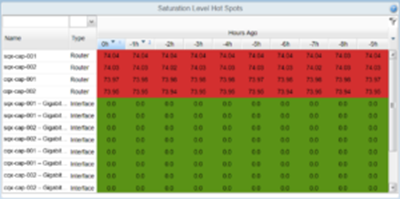
The new capabilities have been designed to “help our customers respond quickly to incidents and outages and project their future capacity needs,” says Mezger. Its introduction follows the recent addition of TNS’s TNSXpress Layer 1 low-latency connectivity solution to the London Stock Exchange’s City of London data centre.

Subscribe to our newsletter

Related content

WEBINAR

Recorded Webinar: How to move to a modern, component based trading architecture using a Buy AND Build approach

To remain competitive in today’s electronic markets, firms need trading architectures that support rapid innovation, effortless integration of new capabilities, and the agility to respond to shifting market demands. This is prompting technology leaders to move beyond the traditional “Buy vs. Build” debate, a false dichotomy that oversimplifies the choice between generic, off-the-shelf platforms and...

BLOG

Breaking Conway’s Law: Why Composable Trading Platforms Demand Organisational Change, Not Just Better APIs

Nearly 60 years ago, Melvin Conway observed that an organisation’s technology will inevitably mirror its internal structure. It’s a law that has aged uncomfortably well in capital markets, where billions spent on trading, risk and analytics systems have produced vertical stacks that reflect business-line org charts rather than the horizontal data flows firms now need...

EVENT

AI in Capital Markets Summit London

Now in its 3rd year, the AI in Capital Markets Summit returns with a focus on the practicalities of onboarding AI enterprise wide for business value creation. Whilst AI offers huge potential to revolutionise capital markets operations many are struggling to move beyond pilot phase to generate substantial value from AI.

GUIDE

Regulatory Data Handbook 2024 – Twelfth Edition

Welcome to the twelfth edition of A-Team Group’s Regulatory Data Handbook, a unique and useful guide to capital markets regulation, regulatory change and the data and data management requirements of compliance. The handbook covers regulation in Europe, the UK, US and Asia-Pacific. This edition of the handbook includes a detailed review of acts, plans and...